Use our interactive title insurance calculator below to instantly estimate your closing costs based on your property value.
Title Insurance Calculator & Closing Cost Estimator
Estimate title insurance premiums and closing costs before purchasing a home. Adjust the example rates and fees to match your expected expenses.
Estimated amount based on the values entered.
How It Works
1. Enter the purchase price and loan amount.
2. Select the title policies and adjust the example rates.
3. Enter other expected closing fees.
4. Click Calculate Costs to see your estimate and itemized breakdown.
Share Your Calculator
Copy the current page URL to share this calculator.
Disclaimer: This is an illustrative estimate, not an official quote. Insurance rates, taxes, recording fees, and closing costs vary by location and provider. Confirm all figures with your title company or closing agent.
What Is Title Insurance in Real Estate?
Title insurance is a unique protective policy for property owners and lenders. Unlike regular insurance that covers future accidents, this policy covers past mistakes regarding a land title. It protects you against financial losses from hidden ownership claims.
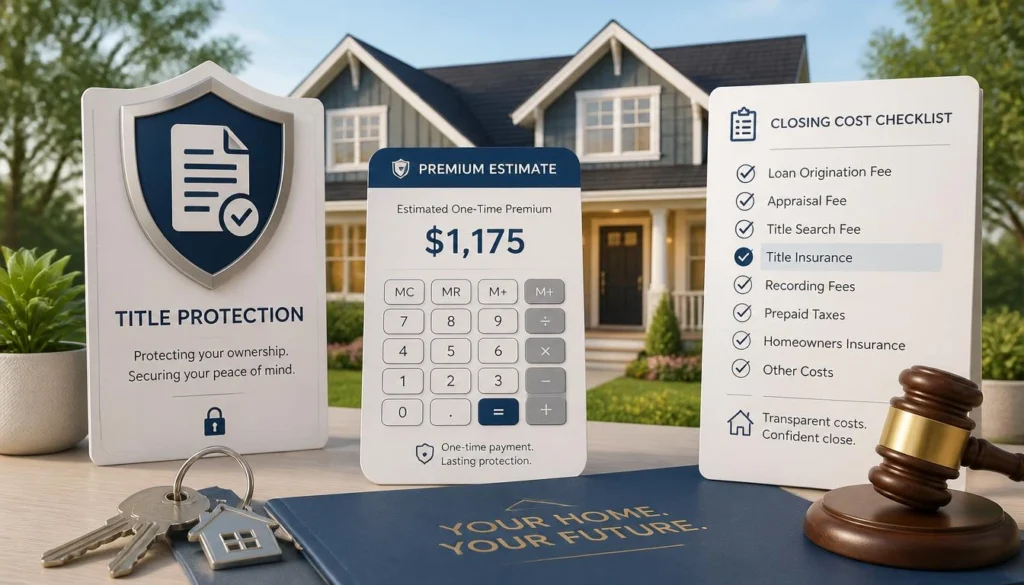
Think of it this way: what if someone from decades ago still had a legal claim to your property? Maybe there’s an old unpaid tax lien, a forged signature on a deed, or an unknown heir who suddenly appears. Without title insurance, you’d be on the hook for expensive legal battles – or worse, you could lose your home entirely.
A title insurance policy steps in to cover these hidden risks. It’s your safety net against ownership disputes that could threaten your entire investment. Just like you’d use a rental property calculator to evaluate investment returns, a title insurance calculator helps you understand your protection costs.
Why Title Insurance Is Mandatory for Mortgages
Banks and financial institutions will not lend you money without protection. They require a specific policy to ensure their financial investment is secure. If a major ownership dispute arises later, the lender’s money is completely covered.
Your lender needs protection for their investment. If a title defect surfaces later and someone else has a legitimate claim to the property, the bank could lose their money. A lender’s title policy ensures they’re covered for the mortgage balance.
This requirement exists because title issues happen more often than people think. Property records can contain errors going back generations, and lenders aren’t willing to take that risk. Similar to how a commercial mortgage calculator helps lenders assess risk, title insurance protects their financial interest.
The Critical Difference Between Owner’s and Lender’s Policies
A lender’s policy only protects the bank’s mortgage loan balance. An owner’s policy is optional but highly recommended to protect your personal equity down payment. Buying both at the same time usually triggers a discounted simultaneous issue rate.
| Policy Type | Who It Protects | Required? | Coverage Duration |
|---|---|---|---|
| Lender’s Policy | The bank’s mortgage balance | Yes, always | Until loan is paid off |
| Owner’s Policy | Your equity and investment | No, but recommended | As long as you own the home |
A lender’s title policy only covers the bank. If a title claim arises, the bank gets their money back, but your down payment and equity remain unprotected.
An owner’s title policy protects you. It covers your financial interest in the property and lasts as long as you or your heirs own the home. The smart move? Buy both at the same time to get a simultaneous issue rate discount. Just as you’d compare HELOC payment options for financing, comparing title insurance quotes ensures you get the best deal.
Who Pays for Title Insurance at Closing?
Customs vary heavily depending on the local county and real estate market you are buying in. In many regions, the home seller pays for the buyer’s policy to prove clear ownership. In other regions, the buyer pays for all insurance costs out of pocket.
Your real estate contract should specify who pays what. Don’t assume – ask your real estate agent or title company to clarify before signing anything. Similar to how SBA loan calculators help business owners understand costs, understanding title insurance rates helps homebuyers budget properly.
Typical Cost Split:
- Seller pays: Varies by county and state
- Buyer pays: Varies by county and state
- Negotiable: Almost always
Common Title Defects Your Policy Protects Against
Property records can contain serious mistakes spanning several decades. Common defects include unrecorded construction liens, unpaid property taxes, and fraudulent signatures on past deeds. Conflicting wills from missing heirs can also disrupt your homeownership.
Common Title Problems:
- Unrecorded liens – Contractors who weren’t paid for work on the property
- Unpaid property taxes – Old tax debts that transfer with the property
- Forged documents – Fake signatures on deeds or mortgages
- Missing heirs – Relatives who suddenly claim ownership rights
- Conflicting wills – Disputes over who legally inherited the property
- Boundary disputes – Neighbors claiming parts of your land
- Fraudulent conveyances – Properties sold by someone who didn’t own them
A thorough title search catches most of these issues before closing. But some problems don’t surface until years later – that’s when your title insurance coverage becomes essential. Just as you’d calculate construction loan costs before building, you should calculate title insurance costs before buying.
How Much Does Title Insurance Typically Cost?
Expect to pay between 0.5% and 1.0% of the home’s total purchase price. On a $300,000 home, the total premium usually falls between $1,500 and $3,000. This is a one-time fee paid at closing, not a monthly premium.
| Home Price | Estimated Title Insurance Cost |
|---|---|
| $200,000 | $1,000 – $2,000 |
| $300,000 | $1,500 – $3,000 |
| $400,000 | $2,000 – $4,000 |
| $500,000 | $2,500 – $5,000 |
Use a title insurance calculator to estimate your specific costs based on your property value and location. These tools give you a realistic budget number before you reach the closing table. Similar to how a DSCR calculator helps investors analyze property deals, a title insurance estimator helps buyers plan their closing budget.
Understanding the Risk Premium Breakdown
The cost of your policy is directly tied to the total liability amount, which matches the purchase price of the home. Private underwriters analyze decades of risk data to determine this premium. The higher the property value, the higher the insurance tier.
This is why using a title insurance calculator is so valuable. It factors in your specific property value and local rates to give you an accurate estimate. Just as a self-employed mortgage calculator helps freelancers qualify for loans, a title insurance estimator ensures clean ownership transfer.
Private Underwriters vs. Independent Title Agents
An underwriter is the massive insurance corporation that actually backs your policy and pays out claims. An independent agent is the local professional who handles your paperwork and conducts the closing meeting. Most local businesses work as agents for national underwriters.
When choosing a title insurance company, understand the difference. The title insurance underwriter provides the financial backing, while the title agent handles the day-to-day process. Just as a bridge loan calculator helps buyers with short-term financing, understanding these roles ensures smooth transactions.
Does Title Insurance Ever Expire?
A lender’s policy expires the moment the mortgage loan is fully paid off or refinanced. An owner’s policy lasts as long as you or your heirs own the property. You never have to renew it or pay annual fees.
This is one of the best features of title insurance – it’s a one-time fee with lasting protection. Your owner’s title insurance remains active indefinitely, providing peace of mind for generations.
What Is a Title Search and How Does It Work?
Before issuing a policy, a professional title agent searches public history records. They inspect deeds, wills, divorce decrees, and bankruptcy filings at the record clerk’s office. This search resolves most issues before you buy the house.
A title search typically takes 3 to 14 days, depending on how complex the property’s history is. The title agent resolves most issues before closing, but some hidden defects can emerge later – which is exactly why you need title insurance protection. Similar to how commercial equipment loan calculators help businesses plan, a title search ensures clean ownership transfer.
The Role of an Escrow Agent During Closing
An escrow agent acts as a neutral third party holding funds and legal documents. They ensure all conditions of the real estate contract are met before distributing money. The title company often handles the escrow process simultaneously.
What Escrow Agents Do:
- Hold your down payment securely
- Ensure all closing conditions are satisfied
- Distribute funds to the right parties
- Coordinate with the title company
Many title companies handle escrow services simultaneously with title insurance issuance. This streamlines the process and keeps everything under one roof. Similar to how truck loan calculator helps buyers find affordable financing, escrow agents ensure smooth transactions.
How to Lower Your Closing Title Fees
Always ask the title company for a “reissue rate” if the seller owned the home for under ten years. Shopping around and comparing local independent agents can also save you hundreds of dollars. Always ask for an itemized fee breakdown before signing.
Money-Saving Tips:
- Ask for a reissue rate – If the seller owned the home for less than 10 years, you might qualify for a 10-40% discount
- Shop around – Compare quotes from multiple title agencies
- Negotiate – In some markets, title fees are negotiable
- Request itemized breakdown – Know exactly what you’re paying for
- Time your purchase – Some companies offer discounts during slow periods
The reissue rate is your best bet for significant savings. It applies when the property was previously insured within the last 5-10 years. Just as a percentage decrease calculator helps you spot cost changes, comparing title insurance quotes helps you find affordable coverage.
What Fees Are Included in Closing Costs?
Closing costs bundle several administrative expenses together. Beyond the insurance premium, you will see settlement fees, notary charges, and courier costs. General closing transaction fees are also added to the final sheet.
Typical Closing Costs:
| Fee Type | Estimated Cost |
|---|---|
| Title Insurance Premium | 0.5% – 1.0% of purchase price |
| Settlement Fees | $200 – $500 |
| Notary Charges | $50 – $150 |
| Courier Costs | $30 – $100 |
| Administrative Fees | $100 – $300 |
Understanding these fees helps you budget accurately. Use a title insurance calculator to estimate your specific costs.
The Hidden Dangers of Forgoing Owner’s Insurance
Skipping an owner’s policy to save cash upfront leaves you completely exposed. If a long-lost heir wins a legal claim to your land, you could lose the home. You would also remain fully responsible for paying off the bank’s mortgage.
If a title defect emerges and you don’t have owner’s title insurance, you’ll pay all legal fees out of pocket. In worst-case scenarios, you could lose your home and down payment. Don’t take this risk – the upfront cost is minimal compared to potential devastation.
How Refinancing Affects Your Insurance Policies
Refinancing replaces your old mortgage with a brand new loan. Because it is a new loan, the lender will force you to buy a new lender’s title policy. However, your original owner’s policy remains active and untouched.
What Happens During Refinancing:
- Your old lender’s policy expires when the original loan is paid off
- You’ll need a new lender’s title policy for the new mortgage
- Your owner’s title policy remains active and untouched
- You don’t need to buy owner’s coverage again
The title company will conduct a new title search to ensure no new liens or judgments have attached to the property since your original purchase. Similar to how cap rate calculator helps investors evaluate returns, a title insurance estimator helps homebuyers evaluate protection costs.
How to File a Title Insurance Claim
Contact your insurance provider immediately if you receive a legal notice or lien demand. Submit your original policy documents along with copies of the threat. The insurer will hire attorneys to defend your property rights in court.
Steps to File a Claim:
- Contact your provider immediately – Don’t delay
- Submit original policy documents – Keep copies for your records
- Provide copies of the threat – Legal notices, lien demands, etc.
- Cooperate with the insurer’s attorneys – They’ll defend your rights
- Document everything – Keep records of all communications
Your title insurance company handles the legal defense and covers your losses. This is why title insurance coverage is so valuable.
Choosing the Right Title Insurance Company
Do not simply accept the first company your real estate agent suggests to you. Research the financial stability ratings of major national underwriters online. Look at local customer reviews regarding closing speed and communication.
What to Look For:
- Financial stability ratings
- Customer reviews and ratings
- Closing speed and communication
- Local presence and reputation
- Transparent pricing
Comparing title insurance providers ensures you get fair pricing and reliable service. Just as a net worth calculator helps you track financial progress, comparing title companies helps you make informed decisions.
How to Read Your Closing Disclosure Form
Look closely at Page 2, Section H of your official Closing Disclosure document. This section details all your optional and required title expenses. Compare these numbers against your original Loan Estimate to catch unexpected price hikes.
What to Compare:
- Loan Estimate vs. Closing Disclosure numbers
- Title insurance premium amounts
- Settlement fees and notary charges
- Courier costs and administrative fees
If you spot unexpected increases, ask questions immediately. You have the right to understand every fee before signing. Just as you’d use a free online calculator tool to verify calculations, comparing closing documents helps you catch unexpected price hikes.
Final Summary: Is the Expense Worth It?
Purchasing a home is the largest financial investment of your life. Title insurance offers essential peace of mind against legal disasters for a single, one-time fee. Using an online calculator helps you accurately budget for these costs well in advance.
Think about it this way: for a few thousand dollars, you’re protecting a property worth hundreds of thousands. If a title claim surfaces – even decades later – your title insurance company handles the legal defense and covers your losses.
Using a title insurance calculator helps you budget accurately. Comparing title companies ensures you get fair pricing. And understanding your policy coverage gives you peace of mind.
Don’t skip owner’s title insurance. The upfront cost is minimal compared to the potential financial devastation of an unprotected title dispute.
Frequently Asked Questions (FAQ)
What is the standard fee for title insurance?
The standard fee typically ranges from 0.5% to 1.0% of the property’s total purchase price. On a $400,000 home, the total premium usually falls between $2,000 and $4,000.
Is title insurance a one-time fee?
Yes. Title insurance is paid as a single, one-time premium at the closing meeting. There are no monthly payments, annual renewals, or hidden recurring fees.
Can I choose my own title insurance company?
Yes. Real estate buyers have the legal right to shop around and choose their own provider. Sellers cannot force you to use a specific private title company as a condition of sale.
Does title insurance cover property damage?
No. Title insurance only covers legal ownership defects, liens, and boundary disputes. For physical property damage like fire, floods, or storms, you must purchase a standard homeowners insurance policy.
What happens if I don’t buy an owner’s title policy?
If an undetected title defect arises (such as a previous owner’s unpaid taxes or a forged deed), you will have to pay out-of-pocket for all legal fees. In a worst-case scenario, you could lose your home and your entire down payment.
What is a title insurance reissue rate?
A reissue rate is a 10% to 40% discount offered on your title insurance premium. It applies if the property was previously insured by a title company within the last 5 to 10 years, as the historical risk search is shorter.
Does a lender’s title policy protect the buyer?
No. A lender’s policy strictly protects the bank’s mortgage loan balance. If a title lawsuit occurs, the bank is covered, but your personal equity down payment remains completely unprotected unless you buy an owner’s policy.
Why do I need to buy title insurance again when I refinance?
When you refinance, you are paying off your old loan and creating a brand-new mortgage. The bank requires a new lender’s policy to ensure no new liens or judgments have been attached to the property since your original purchase.
How long does a title search take?
A standard title search takes between 3 to 14 days to complete. The timeline depends heavily on the complexity of the home’s ownership history and how quickly records are processed.
Who pays for the title search fee?
The responsibility for the title search fee is negotiable in the real estate contract. In many markets, the seller covers the cost to prove they are transferring a clean title, while in others, the buyer pays for it as part of their closing fees.
Disclaimer
Disclaimer: The calculations provided on this website are estimates for educational purposes only. Actual title fees vary by provider, location, and transaction details. Please consult a licensed title agent or real estate attorney for a binding fee quote. This content is for informational purposes only and does not constitute legal or financial advice. Always verify all costs and requirements with your chosen title insurance provider before making any decisions.